
Analysis of the main differences between the upgrade from "GB 32284-2015" to "GB 19762-2025"
2026-06-02 07:48:28 963 江苏海珐The "GB 19762-2025 Minimum Allowable Values of Energy Efficiency and Energy Efficiency Grades for Centrifugal Pumps" published in 2025 was officially implemented on March 1, 202. This standard formally replaces two old standards: first, "GB 19762-2007 Minimum Allowable Values of Energy Efficiency Evaluating Values of Energy Conservation for Clear Water Centrifugal Pumps," and second, "GB32284-2015 Minimum Allowable Values of Energy Efficiency and Energy Efficiency Grades for Petrochemical Centrifug Pumps." Among these, GB 32284-5 was abolished on March 1,2026, and was fully replaced by GB 19762-2025.
I. Change in Standard Positioning: From "Petrochemical Pump-Specific" to "Unified Centrifugal Pump Standard"
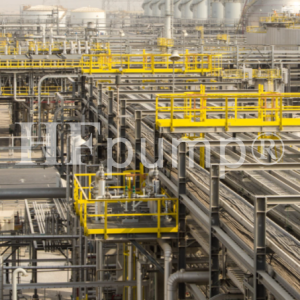
GB 32284-2015 had a relatively specific scope, mainly targeting petrochemical centrifugal pumps, to centrifugal pumps with closed impellers used to transport clean liquids in such as petroleum and chemicals. It functioned more as a dedicated energy efficiency evaluation standard for pump products in the petrochemical. In contrast, GB 19762-2025 has been directly renamed "Minimum Allowable Values of Energy Efficiency and Efficiency Grades for Centrifug Pumps," significantly expanding its scope of application. It no longer targets only petrochemical pumps but instead incorporates both clear water centrifugal pumps and petrochemical centrifugal pumps into the same mandatory energy efficiency standard system. The core reason this is that although clear water centrifugal pumps and petrochemical centrifugal pumps have different application scenarios, their basic working principles, energy efficiency evaluation methods, and testing methods are highly correlated, thus providing a foundation for unified management.
II. More Unified Standard System, Reducing Confusion in Enterprise Implementation
In the past, clear water pumps implemented GB 19762-2007, petrochemical pumps implemented 32284-2015. For pump manufacturers, if their products involved both general industrial water systems and petrochemical or chemical process systems, problems such as inconsistent standard references, inconsistent wording in bidding documents, and differing certification would easily arise. After the implementation of GB 19762-202, clear water centrifugal pumps and petrochemical centrifugal pumps been integrated into the same standard. For manufacturing enterprises, GB 19762-202 can now be uniformly referenced in product design,, energy efficiency certification, and bidding responses. The China Quality Certification Center has also clarified that, effective March 1, 2026, new applications for centrifugal pump energy conservation certification must adopt the new standard, certification certificates under the old standards will no longer be issued.
III. Energy Efficiency Grades Still Divided into Three Levels, But Requirements Are Stricter
The new standard still adopts a three-tier energy efficiency grading system of Grade 1, Grade 2, and Grade3, where Grade 1 represents the highest energy efficiency and Grade 3 is the minimum allowable value of energy efficiency, i.e., the minimum market requirement. In other words, if a requires that "pump energy efficiency shall not be lower than GB 19762-2025 Minimum Allowable Values of Energy Efficiency Energy Efficiency Grades for Cental Pumps," this generally understood to mean that at least Grade 3 energy efficiency must be met. If the customer explicitly requires energy-saving high-efficiency, or Grade 1 energy efficiency, then a higher grade shall be implemented. Compared with GB 32284-2015, 19762-202 imposes generally higher requirements on pump efficiency at the same grade. That is to say, petrochemical pumps that previously could achieve a certain grade under GB 32284-2015 may not necessarily the same grade under GB19762-2025. Enterprises cannot simply continue using efficiency data from old catalogs but should recalculate in accordance with the new standard. Local quality inspection authorities have also pointed out in their interpretations of the new standard that at the same energy efficiency grade, the new imposes higher requirements on pump efficiency.
IV. Removal of Old Concepts Such as " Minimum Allowable Values of Energy Efficiency" and "Evaluating Values of Energy Conservation"
In addition to minimum allowable values of energy efficiency energy efficiency grades, GB32284-2015 also involved content such as "target minimum values of energy efficiency" "evaluating values energy conservation." GB 19762-2025 has adjusted contents, deleting the target allowable values of energy efficiency and evaluating values of energy conservation for petrochemical centrifugal pumps, and placing greater emphasis on the management logic of "energy efficiency" and "minimum allowable values of energy efficiency." This means the new standard places greater emphasis on two issues: first, whether the product meets the minimum energy efficiency requirements and can enter the market or participate in certification; second, which energy efficiency grade the product to and whether it possesses energy-saving and high-efficiency competitiveness. For enterprises, the language of the standard is clearer more convenient for expression in bidding documents, for example: "The pump efficiency meets the minimum allowable values of energy efficiency requirements for the corresponding pump type, flow range, and specified point in GB 19762-2025, with an energy efficiency grade of no less than Grade 3."
. More Systematic Evaluation Methods and Calculation Approaches
GB 19762-2025 is not merely a simple replacement of the old standards but rather a re-integration of energy efficiency evaluation methods. The new standard specifies the energy efficiency, minimum allowable values of energy efficiency energy efficiency calculation methods, and test methods for centrifugal pumps, covering both clear water centrifugal pumps and petrochemical centrifugal pumps. This has a direct impact on pump manufacturers: one cannot simply look at nameplate efficiency or catalog efficiency, but must instead examine the specified point efficiency as defined by the standard. In other words, the energy efficiency judgment of a pump typically requires calculation based on factors such as specified flow rate, specified head, pump type, specific speed range, and efficiency correction. This is particularly true for chemical process pumps, where operating conditions are complex, and factors such as medium density, viscosity, materials, sealing schemes, and impeller trimming all affect actual operating efficiency. However, standard evaluation must still return to pump efficiency under specified test conditions.
VI. Practical Impact on Petrochemical Pump Enterprises
For petrochemical pump manufacturing enterprises, the implementation of 19762-2025 mainly brings the following impacts. First, standard references in bidding documents need be updated. Writing "implementing GB 32284-2015" in the past is no longer; after March 1, 2026, it should be changed to "implementing GB 19762-2025." Second, catalogs and data sheets need to be re-verified. Especially for products such as API 610 chemical process pumps, OH2, BB2, BB3,4, and BB5 if customers require energy efficiency compliance, enterprises should reconfirm efficiency grades according to the new standard and cannot simply continue using old energy efficiency conclusions. Third, product design needs to place greater emphasis on hydraulic efficiency. After the new standard raises energy efficiency requirements, pump manufacturers need to be more refined in areas such as impeller hydraulic models, volute design, wear ring clearances, surface roughness, impeller trimming ranges, and control of bearing and seal friction losses. Fourth, energy conservation certification needs to be converted to the new version. The CQC notice clarifies that products certified under the old standard may apply for conversion to new standard certification certificates, and the conversion of old standard certification certificates should be completed before March 1, 2027. Those that fail to complete conversion within this period will face suspension, and those still not completed by May 31,2027, will have their certificates revoked.
VII. Impact on Purchasers and End Users
For owners, design institutes, and purchasers, the significance of the new standard is evident. In the future, when writingenergy efficiency shall not be lower than GB19762-2025" in technical specifications, the default meaning is that the pump efficiency shall not be lower than the minimum allowable value of energy efficiency specified in new standard. If the project intends to procure more energy-efficient products, it should further clarify by writing "energy efficiency grade of no less than Grade 2" or "ving Grade 1 energy efficiency." For continuous operation plants in the chemical, petrochemical, coal chemical, and fine chemical industries, the procurement cost of pumps accounts for only a small portion of the total life-cycle cost, while electricity consumption represents the major long-term cost. Therefore, the implementation of GB 19762-2025 drive users to shift from "focusing only on price" "focusing on efficiency service life, and operating costs."
VIII. Conclusion
Overall, the upgrade from GB 32284-2015 to GB 19762-202 is not simply a change in standard numbering, but rather an integrated upgrade of China's centrifugal pump energy efficiency management system The new standard unifies water centrifugal pumps and petrochemical centrifugal pumps under the same energy efficiency standard, expands the scope of application, removes certain transitional concepts from the old, raises energy efficiency requirements, and certification and market access rules clearer. For pump manufacturing enterprises, GB 62-2025 means that product efficiency, catalog data, bidding documents, and energy conservation certification all need to be updated simultaneously. For petrochemical pump enterprises, future competition will not only be in materials, sealing, structure, and price, but will increasingly be reflected in competition in hydraulic models, manufacturing precision, and energy efficiency grades. Against the broader backdrop of "dual carbon" goals and industrial energy conservation, high-efficiency centrifugal pumps will an important development direction in the chemical pump market.
iangsu Haifa Machinery Manufacturing Co., Ltd. was restructured from Jiangsu Ligong Group Co., Ltd. Jingjiang Stainless Steel Pump and Valve Factory of the Iron and Steel Research Institute of the Ministry of Metallurgical Industry, which was established in 195. The company mainly produces API 610 chemical process pumps - OH1 pumps, OH2 pumps,3 pumps, OH4, BB1 pumps, BB2 pumps, BB3, BB4, BB5 double-casing multistage pumps, VS1, VS4,5, VS6 barrel-type pumps, HES-type chemical process pumps, chemical pumps, petrochemical pumps, sixth-generation ultra-low carbon stainless steel high-quality leak-free molten urea pumps, urea hydrolyzer feed pumps, high-temperature asphalt pumps, pitot tube pumps, rotary jet pumps, low-flow high-head pumps, multistage vortex pumps, high-temperature molten salt pumps,-temperature nitric acid pumps, vertical submerged pumps, magnetic drive pumps, low-temperature liquid hydrogen and methanol pumps, high-pressure liquid hydrogen pumps, high nitric acid magnetic drive pumps, magnetic drive pumps for conveying solid-containing media, industrial pumps, canned motor pumps, slurry pumps, titanium tetrachloride pumps, strong self-priming pumps, PTFE-lined pumps, plate-lined PTFE pumps, leak-free pumps, desulfurization and denitrification pumps, alkali pumps, pumps, geothermal pumps, oil pumps, axial flow pumps, printing and dyeing pumps, dyeing and finishing pumps, titanium alloy pumps, C-276 material, Hastelloy, 316L material, 347 material, forced circulation pumps, fourth-generation nuclear power pumps, nuclear island pumps, filter press专用 pumps, refrigerant pumps, long-shaft vertical submerged pumps, CQC Grade 1 energy efficiency chemical pumps, high-pressure descaling industrial pumps, and Chinese chemical pumps. www.jslgpump.com Tel: 13905263417 E-mail: jslgpump@gmail.com -mail: jsareva@163.com
上一篇:Design of magnetic drive pump for ultra-high temperature media 下一篇:API 610 / ISO 13709 Design Considerations for Pump Vibration Value Response
Jiangsu Haifa Machinery Manufacturing Co., Ltd.
📍 Headquarters: Jingjiang Economic and Technological Development Zone, Jiangsu Province (Yangtze River Delta Ecological Green Integration Demonstration Zone, Jingjiang Park)
📞 Hotline: (086)13905263417 & (086)13908365805
📠 Fax: (086)0523-84323581
📧 Email: jsareva@163.com jslgpump@gmail.com
🔧 Technical Support: One-stop service for pump & valve customization, non-standard design, on-site surveying, maintenance and repair
Member of China General Machinery Industry Association | Director of Valve Association | SINOPEC Resource Market Member Factory

Get QR Code