
Trust Jiangsu Haifa: a supplier of high-quality leak-free chemical pumps and pitot tube pumps
2026-04-21 23:38:32 764 江苏海珐Precision Selection and Efficient Maintenance: How to Ensure Stable Operation of Chemical Pumps and Pitot Tube Pumps
In the production lines of industries such as chemical processing, pharmaceuticals, and environmental protection, the stable operation of chemical pumps and pitot tube pumpsthe core equipment responsible for fluid conveyance—is of critical importance. Many equipment management engineers and procurement managers frequently encounter the following challenges: new pumps develop leaks shortly after initial startup, resulting in material loss and on-site contamination; equipment operating under harsh conditions (such as conveying corrosive, particle-laden, or high-temperature media) experiences elevated failure rates and soaring maintenance costs; and pump efficiency noticeably declines over time, impacting overall system energy consumption and production capacity. The root causes of these issues often lie in improper product selection or insufficiently precise routine maintenance procedures.
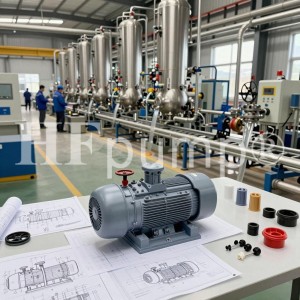
As a fluid equipment supplier with long-term service to the process industry, Jiang Haifa has consolidated a practical guide to selection and maintenance focused on leak-free chemical pumps and pitot tube pumps, based on extensive field case studies.
Step One: Precision Selection Is the Starting Point for Eliminating Leaks
Selection errors are the breeding ground for all subsequent problems. We recommend following these core steps:
Define the media characteristics checklist: This is the primary basis for selection. The chemical name, concentration, temperature, density, viscosity, presence of solid particles, and particle size and hardness of the medium must be accurately listed. For example, the pump materials chosen for conveying concentrated sulfuric acid versus dilute sulfuric acid are entirely different.
Determine key operating parameters: Accurately obtain or calculate the required flow rate, head (pressure), and net positive suction head required (NPSHr). It is advisable to allow a reasonable margin, but avoid "overpowering" the pump, which would cause it to operate in an inefficient zone, leading to energy waste and equipment damage.
Match pump type and sealing configuration:
- For leak-free chemical pumps (such as magnetic drive pumps and canned motor pumps): Pay close attention to the torque transmission capability of the magnetic coupling and the pressure resistance and corrosion resistance of the containment shell materials. For high-temperature media, verify that the temperature rating of the magnet materials is sufficient. - For pitot tube pumps (also known as rotating jet pumps): Their unique structure is well-suited for high-head, low-flow conditions and offers a certain tolerance for fine particles in the medium. During selection, special attention should be paid to the clearance design between the pitot tube and the rotating casing, as well as wear resistance of the materials.
Material confirmation: Based on the corrosiveness and temperature of the medium, jointly determine the metallic or non-metallic materials for wetted components (such as the pump casing, impeller, and pitot tube) with the supplier. A detailed material compatibility chart is an essential reference.
Step: Standardized Installation and Commissioning Are the Guarantee of Performance
Even with correct selection, improper installation can cause leaks and vibration.
Foundation and piping: Ensure the foundation is solid and the piping is independently supported to avoid subjecting the pump body to additional pipe stress. The suction piping should be as short and straight as possible, with minimal elbows, to ensure adequate suction head or meet NPSH requirements.
-Alignment: For pumps with external bearings, the shaft alignment between the motor and the pump must be calibrated and rechecked after temperatures stabilize during initial operation.
First startup and shutdown: Adequate priming and venting must be performed before. For magnetic drive pumps, dry running or cavitation is strictly prohibited. After the first startup, check vibration, noise, temperature rise, and leakage, and record both no-load and loaded current readings.
Step Three: Implement Preventive Maintenance to Extend Service Life
Reactive maintenance carries the highest cost. Establishing a preventive maintenance plan effectively avoids unplanned downtime.
Daily inspections: Operators should record the pump's discharge pressure, current, vibration amplitude, bearing temperature, and any abnormal noise on a daily basis. For magnetic drive pumps, pay attention to any abnormal temperature rise at the containment shell area, which may indicate increased eddy current losses.
Periodic maintenance:
- Lubrication: Replace or replenish bearing housing oil or grease according to the intervals and grades specified in the manual. - Condition monitoring: Use a portable vibration analyzer quarterly or semi-annually to inspect bearing and shaft system condition. Trend data provides more valuable early warning than single absolute readings. - Seal system inspection: For leak-free pumps equipped with auxiliary sealing systems, check that the circulation lines are unobstructed and that cooling/flush fluid flow and pressure are normal.
Spare parts management: Based on the criticality of the pump and mean time between failures (MTBF stock wearing parts such as mechanical seals (if applicable), bearings, and O-rings. It is recommended to use original certified spare parts to ensure precise dimensional and material matching.
Practical: From Cost Center to Pillar of Stability
Enterprises that follow this systematic approach have reported clear improvements from their equipment management teams. A mid-sized fine chemical enterprise in East China, after systematically upgrading the selection and maintenance procedures for over forty chemical pumps across six production lines (more than 70% of which were supplied by Jiangsu Haifa), achieved the following quantifiable results:
Equipment-related unplanned downtime was reduced by more than 60% within one year.
Material losses and environmental treatment costs caused by pump leaks decreased by approximately 45% year-over-year.
The overall energy efficiency of pump equipment improved by about 15%, primarily due to pumps consistently operating in their high-efficiency zone and reduced internal leakage losses.
These changes demonstrate that treating pumps not as simple "replacement parts" but assystem units" requiring meticulous management—through scientific selection, standardized installation, and proactive maintenance—can directly translate into improved production stability, safety, and economic benefits. Choosing to partner with a supplier like Jiangsu Haifa, which possesses deep industry knowledge and comprehensive service capabilities, provides full-lifecycle professional collaboration from preliminary consultation and selection support to post-installation maintenance guidance, jointly ensuring the reliability and efficiency of fluid conveyance—the lifeline of production.
(Source: Company News | Editor: Haifa Technical Communications Department)
Editor's Note: This article aims to provide actionable, practical guidance for equipment engineers, maintenance supervisors, and procurement technical personnel in the process industry. The content is derived from common issues and solutions accumulated by Jiangsu Haifa's technical service team through years of on-site service, with a focus on methodology sharing. It does not constitute operating instructions for specific products. In actual application, always refer to the official technical manual of the specific.
上一篇:Covering the full series of API610 and CQC Grade 1 energy efficiency: Jiangsu Haifa, a one-stop solution for corrosion-resistant industrial pumps 下一篇:Design and production of chemical pumps
Jiangsu Haifa Machinery Manufacturing Co., Ltd.
📍 Headquarters: Jingjiang Economic and Technological Development Zone, Jiangsu Province (Yangtze River Delta Ecological Green Integration Demonstration Zone, Jingjiang Park)
📞 Hotline: (086)13905263417 & (086)13908365805
📠 Fax: (086)0523-84323581
📧 Email: jsareva@163.com jslgpump@gmail.com
🔧 Technical Support: One-stop service for pump & valve customization, non-standard design, on-site surveying, maintenance and repair
Member of China General Machinery Industry Association | Director of Valve Association | SINOPEC Resource Market Member Factory

Get QR Code