
Design and selection of high-temperature dilute sulfuric acid pump | Corrosion-resistant materials, API610 pump type, and mechanical seal scheme
2026-07-30 08:34:31 178 江苏海珐Publication Date: July 30, 202 Author: Center, Jiangsu Haifa Machinery Manufacturing Co., Ltd Technical Review: Engineer, High-Temperature Corrosion-Resistant Chemical Pumps Applicable Industries: Titanium dioxide, hydrometallurgy, chemical industry, waste acid regeneration, pickling units, sulfuric acid dilution production lines.
High-Temperature Dilute Sulfuric Acid Pump Design & Selection | Corrosion-Resistant Materials API 610 Pump Types, and Seal Solutions
#### I. Core Challenges of High-Temperature Dilute Sulfuric Acid Corrosion: Material Selection Cannot Rely Solely on Concentration
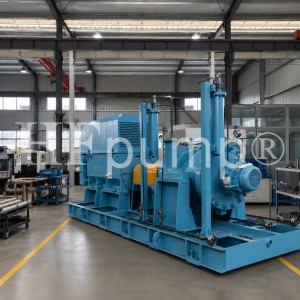
High-temperature dilute sulfuric acid is widely used complete units for titanium dioxide manufacturing, hydrometall, smelting tail gas acid production, phosphorus chemical industry, waste acid recovery, and steel pickling. This medium exhibits a temperature-concentration coupled corrosion characteristic. Selecting materials based solely on sulfuric acid concentration can lead to pump body perforation and rapid corrosion failure of the impeller.
Elevated temperatures significantly increase the uniform corrosion and crevice corrosion rates of stainless steel and common nickel alloys.
Industrial dilute sulfuric acid commonly contains oxidizing impurities such as Fe³⁺, Cu²⁺, nitrate ions, ions, and dissolved oxygen, which can damage the metal passivation film.
Medium flow velocity, solid particles, and start-stop thermal cycles can exacerbate erosion-corrosion.
Haynes official corrosion test data indicates a significant difference between laboratory pure dilute sulfuric acid on-site industrial acid corrosion. For critical operating conditions, on-site coupon immersion testing must be conducted to verify material corrosion resistance. Direct selection based solely on standard corrosion curves is not permissible.
#### II. Recommended Standard Configuration for %–30%, 100–130°C Dilute Sulfuric Acid
Standard Selection Parameter Table
| Design Item | Recommended Configuration | Design Description |
| :--- | :--- |--- |
| Pump Main Structure | API 610 OH2 Centerline Support Process Pump | Preferred for mainstream horizontal operating conditions, suitable for continuous long-term operation. |
|-Wetted Material | Hastelloy C-27 (Upgradable to C-200 based on medium) | Balances corrosion resistance against reducing acids and oxidizing impurities. |
| Pump Shaft Assembly | Solid High-Strength Main Shaft + C-276 Corrosion-Resistant Shaft Sleeve | Prevents corrosion and wear. |
| Mechanical Seal Type | API 682 Cartridge Double-Ended Balanced Seal | Zero leakage, suitable for toxic and corrosive media. |
Seal Arrangement | Arrangement 3 Back-to-Back Double End | High-pressure barrier fluid isolates the process acid. |
| Seal Flush Plan | API Plan 54 External Pressurized Barrier Fluid System |ently cools and lubricates seal faces. |
| Dynamic/Static Friction Pair | Reaction-Bonded Silicon Carbide vs. Silicon Carbide | Resists particle erosion and high-temperature dry running. |
| Secondary Sealing Ring | PTFE Wedge Ring / Acid-Resistant FFKM Perfluoroelastomer | Resists swelling and aging from sulfuric acid. |
| System Protectionlock | Minimum Flow, Bearing Temperature, Seal Low Pressure, Vibration Shutdown Interlocks | Prevents dry running, cavitation, and equipment burnout. |
Note: table provides a general pre-selection scheme. The final material and seal configuration must be determined based on the project's medium report and corrosion rate data.
#### III. Applicable Boundary Comparison of Various Corrosion-Resistant Materials (Supported by EEAT Professional)
3.1elloy B-3 (Nickel-Molybdenum Alloy) – Suitable Only for Pure Reducing Dilute Sulfuric Acid
Advantages: uniform corrosion resistance in low-oxidizing dilute sulfuric acid
Limitations: Corrosion resistance significantly degrades when the medium contains Fe³⁺, nitrate ions, or dissolved air oxygen.
Application Scenarios: High-purity dilute sulfuric acid production lines with stable composition and strict oxygen control. Not recommended for waste acid or pickling circulation units.
3.2 Hastelloy C276 (Nickel-Chromium-Tungsten-Molybdenum Alloy) – General and Reliable Material for Industrial Dilute Sulfuric Acid
Molybdenum provides against reducing sulfuric acid; chromium provides resistance against oxidizing impurities (iron ions, nitrate ions). This is the mainstream material for hydrometall and waste acid recovery
Compared to 316L, 2205 duplex stainless, and common titanium, C-276 adapt to industrial sites with minor fluctuations in concentration and temperature, resulting in lower risks of leakage and shutdown.
3.3 C-2000 Hybrid-BC1 (High-Grade Nickel-Based Alloy) – For Ultra-High Temperature and Complex Impurity Conditions
When the medium temperature exceeds 130°C, ion content is high, or there are significant oxidizing metal ions, and the corrosion rate of C-276 does not meet the equipment design life, upgrade to C-2000. Its optimized molybdenum and chromium ratio further broadens the high-temperature corrosion resistance range.
3.4 PFA/F46 Lined Pump – For Clean, Particle-Free, Low-Pressure Conditions
Applicable: Clean dilute sulfuric acid without hard particles, under low pressure.
Limitations: Long-term high temperatures can cause liner creep and delamination. Liners are prone to under vacuum conditions. Frequent thermal cycling and erosion from solid particles can cause liner peeling.
For waste acid projects with particles and significant temperature fluctuations, prioritize integral nickel-based alloy pumps; lined structures are not recommended.
3.5 Materials Strictly Prohibited as General Materials for High-Temperatureute Sulfuric Acid
304, 316L, 2205/2507 duplex stainless steel, TA2 pure titanium, ordinary carbon steel, and cast iron can only be used for short periods within very narrow temperature and concentration ranges. They will rapidly corrode and perforate when the medium contains oxygen or impurities. Direct selection for industrial continuous units is prohibited.
#### IV. API 610 Pump Type Selection Comparison Table for Different Operating4.1 Horizontal Conveying: API 610 OH2 Core Structural Advantages: Centerline support base ensures uniform thermal expansion of the casing after heating, preventing pipeline stress and seal misalignment. Back-pullout radial split design allows maintenance without dismantling inlet/outlet piping. Enlarged seal chamber accommodates Plan 54 double seals. Standard heavy-duty bearing housing suitable for 10,000+ hours of long-term operation.
New Standard Implementation: GB/T 3215—2025 (equivalent to ISO 09:2009), replacing the old national standard in April 2026.
4.2 High Head / High Pressure / Vertical / Zero Leakage Conditions
| Operating | Recommended API Pump Type | Selection Rationale |
| : | :--- | :--- |
| Large Flow, Medium-High Pressure Circulation | BB2 Between-Bearing Support Pump | High rigidity, minimal thermal deformation. |
Multi-Stage, Ultra-High Head | BB3 / BB4 Multi-Stage Centrifugal Pump | Single stage cannot meet head requirements. |
| Highly Toxic, High-Pressure Medium | BB5 Double-Casing Multi-Stage | Double casing prevents leakage. |
| Tank Vertical Conveying | VS4 / VS5 Vertical Shaft Pump | Reduces suction piping cavitation risk.| Extremely Low NPSHa | VS6 Can-Type Pump | Immersed structure improves effective NPSH. |
| Strict Zero Leakage Requirement | 685 Magnetic Drive Pump | No dynamic seal, completely leak-free. |
| Supplement: For magnetic drive pump selection, eddy current temperature rise in the containment shell, bearing lubrication by the medium, and dry-run protection interlocks must be verified Selection cannot rely solely on the single advantage of being "sealless."
#### V. Detailed Explanation of API Double Seal + Plan 54 Barrier Fluid System
5.1 Why Plan 54 is Preferred for High-Temperature Dilute Sulf Acid High-temperature dilute sulfuric acid vaporizes, scales, and accumulates solid particles on the seal faces. Single-end self-flushing is highly prone to wear and leakage. Plan 54 uses an external, independent power source to deliver clean barrier fluid, continuously cooling and isolating the process acid. barrier fluid pressure is than the pump chamber pressure, preventing sulfuric acid from entering the seal friction pair.
Matching Seal Components: Silicon carbide for the rotating and stationary faces; all metal pressure-containing parts made of C-276 corrosion-resistant material.
5.2 Mandatory Requirements for Barrier Fluid Selection
Prohibition: Using clean water as a barrier fluid strictly prohibited (water mixing with high-temperature dilute sulfuric can cause localized dilution and heat release, exacerbating corrosion).
Options: White oil or specialized ethylene glycol-based synthetic heat transfer fluids can be used. Before, the following must be verified: chemical compatibility, point, high-temperature thermal stability, no secondary contamination when mixed with the process medium
Monitoring: Real-time collection of barrier fluid pressure flow rate, liquid level, and temperature Automatic interlock pump shutdown upon low pressure/low flow.
#### VI. Mandatory Hydraulic and Cavitation Design Requirements
Cavitation calculations must be based on theization pressure at the maximum medium temperature, reserving sufficient NPSHa safety margin.
The rated operating point should be controlled within 80%–120% of the Best Efficiency Point (B). Long-term low-flow operation can cause recirculation temperature rise, cavitation, and excessive vibration.
Essential System Accessories: Minimum flow bypass line, suction pipe vent valve, pump casing drain port, acid-resistant drip tray, and leak detection alarm device.
#### VII.itative Reference Standards (Enhancing Google EEAT Authority)- API Standard 610: Centrifugal Pumps for Petroleum, Petrochemical and Natural Gas Industries.
API Standard 682: Shaft Sealing Systems for Rotating Equipment.
GB/T 3215—2025 / ISO13709: Industrialrifugal Pump Manufacturing, Testing, and Acceptance Specifications.- Haynes Cor-Resistant Alloy Corrosion Data Manual.
SHS01003: Vibration Evaluation Standard for Rotating.
#### VIII. Parameter Checklist for Project Inquiry (Practical for Procurement Engineers)
The following data must be fully provided during the inquiry; otherwise, only a pre-selection can be offered, and the material and seal cannot be finalized:
Sulfuric acid mass concentration, normal/maximum operating temperature rated flow, suction/discharge pressure, NPSHa, medium density/viscosity, solid content, particle size, chloride ion/Fe³⁺/nitrate ion content, operating hours, allowable leakage level, and interlock control requirements.#### IX. FAQ
Q1: Can a 316L stainless steel pump be used for 10% dilute sulfuric acid at 120°C?
A: Long-term continuous use is recommended. 316L is only suitable for short-term trials in pure dilute sulfuric acid without oxygen or metal impurities. Industrial waste acid or pickling media containing oxygen and iron ions will rapidly cause pitting and perforation. For continuous units, C276 nickel-based alloy preferred.
Q2 Which seal plan, Plan 32 or Plan 54, is suitable for high dilute sulfuric acid? A: API Plan 54 double-end pressurized barrier system is preferred. Plan 32 uses an external flush directly drawing process acid. The high-temperature acid containing impurities easily wears the seal faces and cannot provide long-term protection.Q3: How to choose between aFA-lined pump and a C-276 alloy pump? A: PFA lining can be used for intermittent with clean, low-pressure, particle-free media and small temperature fluctuations. For continuous waste acid, media containing solid particles, or units with frequent hot-cold start-stops, a solid Hastelloy alloy pump must be selected.Q4 Should an OH2 or BB2 pump be selected a high-head dilute sulfuric acid unit? A: For single-stage, low-to-medium head applications, use an API 610 OH2 centerline pump. For heads exceeding 150m or high system pressure conditions, select a BB2 between-bearing support structure, which offers higher rigidity and less thermal deformation.
Images for High-Temperature Sulfuric Acid Pump
alt: API 610 OH2 Hastelloy C- High-Temperature Dilute Sulfuric Acidrosion-Resistant Chemical Pump Full Unit Photo
alt High-Temperature Dilute Sulfuric Acid Pump – C-276 Impeller and Pump Body Flow-Wetted Parts Material Display
alt: API 682 Double-Ended Mechanical Seal + API Plan 54 Barrier Fluid System Structure Diagram
alt: Hydrometallurgy Waste Acid Recovery High-Temperature Diluteuric Acid Pump Complete Unit On-Site Photo
alt: Corrosion Performance Comparison Diagram of Various Nickel-Based Alloys (B-3/C-276/C-2000)
上一篇:Jiangsu Hafang API 610 BB2 High-Temperature High-Pressure Process Pump | Application Case of 630°C Secondary Reheating Coal-Fired Power Unit in Yuncheng, Shandong 下一篇:没有了
Jiangsu Haifa Machinery Manufacturing Co., Ltd.
📍 Headquarters: Jingjiang Economic and Technological Development Zone, Jiangsu Province (Yangtze River Delta Ecological Green Integration Demonstration Zone, Jingjiang Park)
📞 Hotline: (086)13905263417 & (086)13908365805
📠 Fax: (086)0523-84323581
📧 Email: jsareva@163.com jslgpump@gmail.com
🔧 Technical Support: One-stop service for pump & valve customization, non-standard design, on-site surveying, maintenance and repair
Member of China General Machinery Industry Association | Director of Valve Association | SINOPEC Resource Market Member Factory

Get QR Code