
The role of the feed pump for the urea hydrolyzer produced by AREVA Machinery in the urea plant
2026-05-02 11:31:44 331Title: The Role of the Hydrolyzer Feed Pump in a Urea Plant
In the urea production process, the hydrolyzer feed pump serves as a critical conveying device, and its performance directly impacts the operational efficiency and environmental compliance of the urea plant. Recently, with the industry's increasing emphasis on energy conservation, consumption reduction, and zero wastewater discharge, technical optimization of the hydrolyzer feed pump has become a focal point. This analyzes its core functions and key selection criteria based on actual operating conditions.
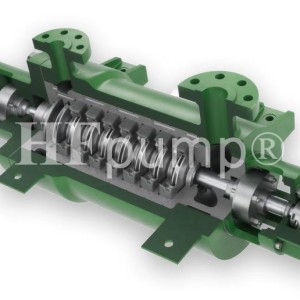
✅ Core Function: Ensuring Stable Feed to the Hydrolyzer
The hydrolyzer feed pump is responsible for transporting the process condensate (containing ammonia and urea) generated by the urea plant to the hydrolyzer. This pump must overcome system pressure (typically 1.5–2.5 MPa) while maintaining a continuous and stable flow rate. If cavitation or flow fluctuations occur, it can lead to insufficient feed to the hydrolyzer, reducing ammonia recovery efficiency and potentially causing plant shutdowns. A fertilizer company in East China (with a daily urea output of 1,500 tons) experienced frequent impeller corrosion due to improper pump selection, requiring maintenance shutdowns twice a month. After switching to a duplex stainless steel pump, the maintenance interval was extended to six months.
✅ Key Performance: Corrosion Resistance and Cavitation Resistance
The process condensate contains ammonia, carbon dioxide, and trace amounts of ammonium carbamate, with a pH range of 8–10, making it corrosive to metal materials. The feed pump should be made of 304L or 316L stainless steel, with optimized design for net positive suction head (NPSH). In a real-world case, a urea plant in Northwest China (with an annual output of 600,000 tons) modified the pump impeller to an anti-cavitation structure, reducing the required NPSH from 5.2 meters to 3.8 meters, effectively eliminating vibration issues during low-liquid-level operation.
✅ Energy Efficiency Considerations Integration with Variable Frequency Drive Technology
Traditional feed pumps often operate at a fixed speed, controlling flow through valve regulation, resulting in energy losses of approximately 15%–20%. By adopting variable frequency drives (VFDs), the pump speed can be automatically adjusted based on the hydrolyzer liquid level, achieving energy savings of 25%–30%. For example, a urea plant in Southwest China (retrofitted in 2023) converted two feed pumps (each with a power rating of 75 kW) to VFD control, saving approximately 420,000 kWh annually while reducing mechanical seal leaks caused by frequent start-stop cycles.
✅ Maintenance Key Points: Focus on Seal and Bearing Life
The mechanical seal is a wear-prone component of the feed pump, with an average lifespan of about 8,000 hours. It is recommended to use cartridge mechanical seals with a flushing line. Bearings should be lubricated with high-temperature-resistant grease, and operating temperatures should be kept below 70°C. A customer in Shandong (with a urea plant in operation for five years) extended the bearing replacement cycle from 12 months to 18 months by regularly monitoring vibration levels (keeping them within 2.8 mm/s).
Summary and Action Recommendations
The selection and maintenance of the urea hydrolyzer feed pump require a comprehensive consideration of medium characteristics, operating parameters, and energy efficiency needs. It is recommended that companies prioritize corrosion-resistant materials, variable frequency drives, and online monitoring systems in new construction or retrofit projects to enhance overall plant reliability. For existing pump units, regular efficiency testing and timely replacement of worn components can prevent single-point failures from disrupting full-scale production.
(Source: Company News | Editor: Engineer Li)
Editor’s Note: This article is compiled based on data from the 2024 domestic urea industry technical exchange conference and on-site surveys of multiple chemical enterprises. It is intended as a reference for production management, equipment procurement, and maintenance personnel.
Jiangsu Haifa Machinery Manufacturing Co., Ltd. was restructured from the former Jiangsu LIGONG Group Co., Ltd. and the Jingjiang Stainless Steel Pump & Valve Factory of the Iron & Steel Research Institute under the Ministry of Metallurgical Industry.
Website: www.jslgpump.com Tel: +86 13905263417
Email: jslgpump@gmail.com Email: jsareva@163.com
上一篇:KNF was founded in 1946 by Kurt Neuberger in Freiburg, Germany, specializing in diaphragm pump industry 下一篇:Characteristics of Jiangsu Haifa's high-quality molten urea pump
Jiangsu Haifa Machinery Manufacturing Co., Ltd.
📍 Headquarters: Jingjiang Economic and Technological Development Zone, Jiangsu Province (Yangtze River Delta Ecological Green Integration Demonstration Zone, Jingjiang Park)
📞 Hotline: (086)13905263417 & (086)13908365805
📠 Fax: (086)0523-84323581
📧 Email: jsareva@163.com jslgpump@gmail.com
🔧 Technical Support: One-stop service for pump & valve customization, non-standard design, on-site surveying, maintenance and repair
Member of China General Machinery Industry Association | Director of Valve Association | SINOPEC Resource Market Member Factory

Get QR Code