
Selection and Application Guide for API685 Magnetic Pumps and Shield Pumps in Different Chemical Engineering Scenarios
2026-07-06 07:36:23 760 江苏海珐In petrochemical, coal chemical, fine chemical, nitric acid units, molten salt for solar thermal power, pharmaceutical intermediates, and overseas refinery projects, the selection of leak-free chemical pumps is receiving increasing attention. The API 685 standard primarily addresses sealless centrifugal pumps for the petroleum, petrochemical, and natural gas industries, with common types including magnetic drive pumps and canned motor pumps. Both types eliminate traditional mechanical seals, reducing the risk of dynamic seal leakage. However, their drive structures, cooling methods, temperature and pressure adaptability, maintenance approaches, and application boundaries differ. When selecting API 685 magnetic drive pumps, API 685 canned pumps, and API 610 chemical pumps, we typically do simply state which type is better instead, we first examine the specific operating conditions. For example, requirements for pumps handling room-temperature highly corrosive media, high-temperature nitric acid, 450°C high-temperature molten salt, coking media containing trace coke fines, high-pressure hydrogenation units, high-purity media for pharmaceutical and electronics applications, and integrated petroleum refining projects are entirely different. If selection is based solely on the term "leak-free," issues such as magnet demagnetization, containment shell wear, bearing seizure, media vaporization, and frequent shutdowns for maintenance can easily arise. Based on our practical experience in chemical pump selection, this article organizes the applicable boundaries of API 685 magnetic drive pumps and canned motor pumps in different chemical scenarios, facilitating quick pump type determination for engineering companies, design institutes, refinery owners, and procurement personnel.
I. Core Differences Between API 685 Magnetic Drive Pumps and Canned Motor Pumps
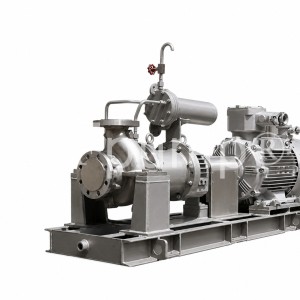
| Comparison Item | API 685 Drive Pump | API 685 Canned Motor Pump |
| :--- | :--- | :--- |
| Principle | Transmits torque through magnetic coupling between inner and outer magnetic rotors; containment shell isolates the medium from the external motor. | Pump shaft and motor rotor are integrated; stator and rotor are separated by a containment shell; the medium participates in internal cooling and lubrication. |
| Seal Structure | Eliminates traditional mechanical seal relies on containment shell for static seal. | Eliminates traditional mechanical seal; relies on containment shell and motor structure for enclosed operation. |
| Type | Typically uses external standard motor, explosion-proof motor, variable frequency motor; easy to replace later. | Uses a specialized canned motor; pump and motor are highly integrated. |
| Adaptability | Widely applicable in conventional temperature ranges; high-temperature types require consideration magnet temperature resistance, heat insulation, and cooling design. | High-temperature canned motor pumps have no permanent magnet demagnetization issue; suitable for some long-term, high-temperature, continuous operation conditions. |
| Pressure Adaptability Applicable for low-to-medium pressure and some custom high-pressure conditions containment shell pressure-bearing capacity is key. | Integrated pressure-bearing structure suitable for some high-pressure, high-hazard media conditions. |
| Cleanliness | Sensitive to particles, ferromagnetic impurities, andizing media. | Relatively better adaptability to trace non-ferromagnetic particles, particle content and erosion risk still need control. |
| tenance Characteristics |atively intuitive structure; motor, bearings, and magnetic coupling components can be maintained in sections. | High degree of integration; requires more specialized maintenance; some faults require complete disassembly and inspection. |
| ation Space | Relatively larger footprint due to split structure; space for coupling and maintenance. | Compact structure; suitable for skid-mounted units, small pump rooms, and space-constrained locations. |
| Typical Advantages | maintenance, good standard motor compatibility, controllable cost, suitable for most clean corrosive and hazardous media. | Compact structure, good safety margin for high temperature and pressure, suitable for some continuous operation and high-hazard media scenarios |
| Typical Limitations | Sensitive to dry running, particle wear, high-temperature demagnetization and abnormal temperature rise of the containment shell. | Higher maintenance difficulty; high requirements for internal cooling circulation, bearing lubrication, and motor insulation. |
II. How to Choose for Room-Temperature, Highly Corrosive Fine Chemical ScenariosTypical Conditions: Room-temperature or medium-low temperature highly corrosive media, e.g., concentrated nitric acid sulfuric acid, hydrofluoric acid, organic solvents, pharmaceutical intermediates, semiconductor cleaning fluids, electroplating solutions. Temperature is typically -20 to 120°C, pressure is low, the medium is relatively clean, and for leakage, contamination, and material corrosion resistance are high.Recommended Solution: Prioritize API 685 magnetic drive pumps.Selection Rationale: These conditions usually involve relatively clean media with low solid content, suitable for the internal structure of magnetic drive pumps. API 685 magnetic drive pumps eliminate mechanical seals, achieving sealing through the containment shell, which reduces the risk of highly corrosive media leakage. For transporting fine chemicals, pharmaceutical intermediates, and high-purity chemical raw materials, motor of the magnetic drive pump is completely isolated from the medium, preventing contamination and maintenance issues caused by media entering the motor cavity. Common materials can be selected based on medium, such as 316L, 904L, 2205 duplex stainless steel,2507 super duplex stainless steel, Hastelloy C-276, Hastelloy C-22, TA2 titanium, PTFE/F46 lining. For example, for media containing chloride ions, titanium orelloy should be evaluated; for highly oxidizing acid media, material corrosion resistance should be further calculated based on temperature and concentration.Areanned Motor Pumps Suitable? Canned motor pumps can also be used for corrosive media, but their motor rotor cavity and internal circulation system are in long-term contact with the medium, requiring higher standards for motor insulation, bearings, and containment shell materials. For fine chemical projects with intermittent, higher maintenance frequency, and strict budget control, magnetic drive pumps are usually more convenient.III. How to Choose for Refinery Delayed Coking, High-Temperature Circulating Oil, and Media Containing Trace Coke Fines?Typical Conditions: Coking units, high-temperature circulating oil, containing trace coke fines or tar-like substances, temperatures may reach 300420°C, some projects require 24-hour operation. These conditions are common in domestic refineries and refinery projects in Russia and Central Asia. Solution: Prioritize evaluation of high-temperature canned motor pumps; compare with API 610 high-temperature process pumps if necessary.Selectione: The difficulty with coking media is not just the high temperature, but potential presence of trace coke fines, gums, asphaltenes, or deposits. Magnetic drive pumps are sensitive to particles and deposits, which can easily wear the containment shell, sliding bearings, and internal circulation channels. If using a magnetic drive pump, filters, flushing, and temperature control protection are usually required, increasing system complexity. Canned motor pumps have no permanent magnetic magnets, thus no issue with high-temperature demagnetization. For some high-temperature continuous operation conditions, canned motor pumps have advantages in compactness and high-temperature adaptability. If trace non-ferromagnetic particles in the medium are controllable, combined with silicon carbide bearings, wear-resistant structures, and heat tracing jackets, long-term operational reliability can be improvedPrecautions: If coke fines content is high, hardness is high, or the medium is prone tooking or crystallization, canned motor pumps are not a universal solution. A comprehensive judgment is needed, combining API 610-BB2 high-temperature process pumps, seal flushing plans, jacketed insulation, and filtration systems.IV. How to Choose for Solar Thermal Power Molten Salt Circulation Systems?Typical Conditions: Our company's high-temperature, high-pressure magnetic drive pumps have been successfully used in molten salt circulation systems with common temperatures of 400–450°C. The media temperature is high, viscosity changes significantly with temperature and the system typically long-term continuous operation, demanding high thermal stability, material temperature resistance, and operational reliability.Recommended Solution: Prioritize evaluation of high-temperature canned motor pumps or specialized high-temperature molten salt pumps.Selection Rationale: Molten salt conditions around 450°C impose very high requirements on magnetic drive pumps. If using a high-temperature design, considerations include high-temperature magnets, heat barriers, water cooling jackets, containment shell temperature rise, bearing cooling, and demagnetization risk. Improper system design can to reduced magnetic coupling capacity, abnormal bearing temperature rise, or magnet demagnetization. Canned motor pumps have no permanent magnet components, making it easier to avoid demagnetization risk in ultra-high-temperature operation. For molten salt circulation systems focus should be on containment shell material, bearing material, insulation structure, start-up preheating, shutdown drainage, and low-temperature solidification risk.Selection Reminder: Once the molten salt medium cools and crystallizes, it can block the pump cavity, piping, and internal channels., besides pump type selection, heat tracing,, preheating, drainage, and temperature control interlocks are equally critical.V. How to Choose for High-Temperaturerated Nitric Acid and Nitric Acid Units?Typical Conditions: Nitric acid units involve both medium/low-temperature nitric acid transport and high-temperature concentrated nitric acid, strong oxidizing, highly corrosive, and volatile conditions. The media is highly hazardous, with strict requirements for leakage control and material selection.Recommended Solution: Select based on temperature and unit location. For small-to-medium sized, room-temperature or medium-temperature nitric acid sections, API 685 magnetic drive pumps can be prioritized. Magnetic drive pumps have a relatively simple structure, are easy to maintain, and suitable for clean, particle-free, highly corrosive media with strict leakage requirements. The containment shell and wetted parts materials can be selected based on nitric acid concentration, temperature and oxidizing properties. For the main high-temperature nitric acid circulation section, if the temperature reaches above 300°C and it is a core continuous operation section, high-temperature canned motor pumps or high-temperature API 610 process pumps need key evaluation. Standard magnetic drive pumps cannot be directly applied; magnet temperature resistance, containment shell temperature rise, cooling circulation, and material corrosion resistance must be.Selection Focus: For high-temperature nitric acid conditions, one cannot simply say "use Hastelloy" or "use titanium." Material suitability varies greatly under different concentrations, temperatures, and impurity conditions. Confirmation should be based on corrosion data, process parameters, and user site experience.VI. How to Choose for High-Pressure Hydrogenation, Coal-to-Liquid, and High-Pressure Circulation ConditionsTypical Conditions: High-pressure hydrogenation, coal-to-liquid, high-pressure hydrocarbon circulation, cracking units, etc., typically feature high pressure, medium-to-high temperature, flammable/explosive nature, and long continuous operation cycles. System pressure may exceed 10 MPa, posing high safety risks. Solution: Prioritize of API 685-pressure canned motor pumps or 610-BB5 high-pressure multi-stage pumps.Selection Rationale: Under high-pressure conditions, the pump's pressure-bearing structure, seal safety, rotor stability, and material strength are key. For magnetic drive pumps, the containment shell must pressure while ensuring magnetic torque transmission. The higher the pressure, the more difficult the containment shell design and the higher the cost. Canned motor pumps use an integrated enclosed structure, safety redundancy advantages in some high-pressure, high-hazard scenarios. However, if flow, head, number of stages, and fall within the range of high-pressure multi-stage pumps, API 610-BB5 barrel-type multi-stage pumps should be evaluated. For critical duties like high-pressure hydrogenation feed, boiler feed water, PTA high-pressure circulation, and oilfield water injection, API 610B5 remains a common heavy-duty option.VII. How to Choose for High-Purity Media in Pharmaceutical, Electronics, and Semiconductor Industries?Typical Conditions: Ultra-pure reagents, electrolytes, electronic chemicals, pharmaceutical intermediates, high-purity solvents, etc., typically require no leakage low contamination, low metal ion leaching. Some workshops also require low noise, low vibration, and operation.Recommended Solution: Prioritize API685 magnetic drive pumps with-metallic containment shells or high-purity materials.Selection Rationale: The motor of a magnetic drive pump is completely isolated from the medium, preventing media from entering the motor cavity, making it suitable for high-purity media transport Depending on media requirements, wetted options include PTFE, F46, silicon carbide, ceramics, Hastelloy, titanium, etc. Canned motor pumps have advantages in low noise, but since the medium participates in internal cooling and lubrication, some high-purity media projects need to evaluate the risks of material leaching inside the motor cavity, insulation system, and. If the project has extremely high noise requirements and the medium allows entry into the internal circulation, canned motor pumps can be compared as an alternative.VIII. How to Choose for Refinery Export Projects in Russia and Central Asia?Typical Conditions: Common characteristics of refinery projects in Russia and Central Asia include low-temperature environments, spare parts lead times, limited on-site maintenance resources, high explosion-proof certification requirements, and complete Russian documentation requirements. Pump selection must not only meet the conditions but also suit overseas delivery and long-term operation/maintenance.Recommended Solution: Select separately for main process and auxiliary sections. For room-temperature auxiliary sections like wastewater, weak acid circulation, chemical dosing, and room-temperature corrosive media, API 685 magnetic drive pumps can be prioritized. The split structure of magnetic drive pumps allows relatively easy maintenance of motors, bearings, and magnetic coupling components, and more flexible spare parts management. For main process high-temperature, high-pressure sections like coking, high-temperature oil products, hydrogenation, and high-pressure circulation, canned motor pumps, API 610-BB2, or API610-BB5 can be prioritized. For overseas projects, high-temperature, high-pressure main process pumps should safety redundancy, long-term operation, and factory testing.Supporting Suggestions for Export Projects: Prepare EAC certification, Russian manuals, Russian drawings, explosion-proof motor documentation, material certificates, performance test reports, and parts lists simultaneously to reduce post-project communication costs overseas.IX. How to Choose for Media Containing Crystals Trace Solid Particles?Typical Conditions: Salt solutions, amino crystallizing liquids, mother liquors, media containing trace solid particles, media prone to crystallization upon cooling. Such media easily cause blockage of internal channels, bearing wear, and seal failure.Recommended Solution: Prioritize evaluation of canned motor pumps or 610 process pumps; use magnetic drive pumps cautiously. Rationale: The internal clearances, containment shell, and sliding bearings of magnetic drive pumps are sensitive to particles. Once particles or crystals enter critical friction pairs, they can easily cause containment shell wear, bearing abnormalities, rotor seizure, or temperature rise. Ferromagnetic impurities can also be attracted by the magnets, causing more severe seizure issues. Canned motor pumps have no magnet attraction issue and offer relatively better adaptability to trace non-ferromagnetic particles, but particle content, particle hardness, and crystallization risk still need control. For conditions with high solid content or severe crystallization, API 610 process pumps,-channel pumps, and wear/corrosion-resistant pumps should be prioritized, equipped with insulation, heat tracing, flushing, and shutdown drainage systems.X. Conditions Where API 685 Magnetic Drive Pumps Are Not Recommended
Media containing iron powder, iron filings, or other ferromagnetic impurities, easily attracted by magnets, causing rotor seizure and containment shell wear.
with high solid content and particles, easily wearing sliding bearings and containment shell.
Long-term operation above 400°C without professional heat insulation, water cooling, and temperature monitoring design.
-pressure conditions exceeding the pressure range of the containment shell specialized structural design.
Media with excessively high viscosity, magnetic coupling torque, leading to decoupling, loss of synchronism, or overload.
Media prone to crystallization, polymerization, or coking without insulation, heat tracing, flushing, and drainage measures.
XI. Conditions Where API 685 Canned Motor Pumps Are Recommended
High-purity electronic chemicals, pharmaceutical ultra-pure media, extremely sensitive to internal material leaching and media contamination.
Small-scale intermittent production projects with limited budgets and on-site emphasis on maintenance convenience.
Media with very poor lubricity, unable to meet internal bearing lubrication and cooling requirements.
Media prone to heavy crystallization, polymerization, or deposition, potentially blocking internal circulation channels.
User sites lacking canned motor maintenance capability and unable to guarantee spare parts lead times.
lines requiring frequent disassembly, inspection, switching, or condition adjustment.
XII. Technical Parameter Reference for Jiangsu Haifa API 610/API 685 Chemical Pumps
| Product | Structural Form | Flow Range | Head Range | Applicable Temperature | Design Pressure | Typical Applications |
| :--- :--- | :--- :--- | :--- :--- | :---| API685-HMA/HME Magnetic Drive Pump | Horizontal, Single-stage, Single-suction, Magnetic Drive, Sealless | 2~2600 m³/h | Up to ~300 m | -80~450℃ | 25~10 MPa | Flammable, explosive toxic, harmful, highly volatile, valuable media, high-temp nitric acid, fine chemicals |
| API610-OH1/OH2 Chemical Process Pump | Horizontal, Radially Split, Single-stage Overhung Centrifugal Pump | 2~2600 m³ | Up to ~300 | -80~450 | 2.545 MPa | General pet processes, corrosive media, high-temp media, continuous transport |
| API610B2 Heavy Duty Process Pump | Horizontal, Bearings, Radially Split, Single/Two/Three Stage | 50~4000 m³ | Up to ~650 m | -80~450℃ | 5.015.0 MPa | High-temp bottom pump, lean/rich amine pump, heavy oil pump, coal chemical circulation pump |
| API610-BB5 Barrel-Type Multi-Stage Pump | Double Casing, Horizontal, Multi-stage, Segmental High-Pressure Centrifugal Pump | 5~730 m³/h | Up to 3400 m | -80~450℃ Up to 35 MPa | Hydrogenation feed,-pressure boiler feed water, PTA high-pressure circulation, oilfield water injection, RO high-pressure system |
XIII. Material and Package Configuration RecommendationsCommon Wetted Parts and Containment Materials for Magnetic Drive Pumps: 316L, 347, 317L, 904L, 2205 Duplex SS, 2507 Super Duplex SS, Hastelloy C-276 Hastelloy C-22, TA2 Pure Titanium, TC4 Titanium Alloy, Silicon Carbide SiC, PTFE/F46 Lining.Common Containment Shell and Casing Materials for Canned Motor Pumps CF8M, CF3M Cast SS, 347 Heat-Resistant SS, Duplex SS, Hastelloy, Titan Alloy.High-Temperature Conditions: Can be equipped with insulation structures, heating jackets, heat tracing systems, and temperature monitoring.Explosion-Proof Motors and Packages: Can be configured with IP65, explosion-proof VFD motors, temperature monitoring, vibration monitoring, dry-run protection, containment shell temperature rise protection, EAC certification, Russian drawings,
上一篇:Selection of 450℃ ultra-high temperature magnetic pumps: leakage-free transportation solutions for high-temperature nitric acid, molten salt, and asphalt 下一篇:Guide for selection of small flow and high head chemical process conditions: Comparison of advantages and disadvantages between API610 BB5 multistage pumps and rotary jet pumps (Pitot pumps)
Jiangsu Haifa Machinery Manufacturing Co., Ltd.
📍 Headquarters: Jingjiang Economic and Technological Development Zone, Jiangsu Province (Yangtze River Delta Ecological Green Integration Demonstration Zone, Jingjiang Park)
📞 Hotline: (086)13905263417 & (086)13908365805
📠 Fax: (086)0523-84323581
📧 Email: jsareva@163.com jslgpump@gmail.com
🔧 Technical Support: One-stop service for pump & valve customization, non-standard design, on-site surveying, maintenance and repair
Member of China General Machinery Industry Association | Director of Valve Association | SINOPEC Resource Market Member Factory

Get QR Code