
Viewing intelligent manufacturing in the pump industry from the 2026 World Artificial Intelligence Conference: How humanoid robots are used in API 610 pump production, equipment inspection, and abnormal alarming
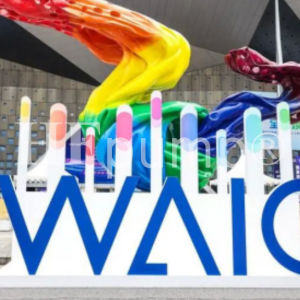
2026-07-17 20:07:21 747 江苏海珐The 2026 World Artificial Conference and High-Level Meeting on Global AI Governance was held in Shanghai from July 17 to 20, with the theme "Intelligent Partners, Creating the Future Together," focusing on exchanges around AI technology innovation, industrial applications, and global. The conference was co-hosted by the Ministry of Foreign Affairs the National Development and Reform, the Ministry of Industry and Information Technology, and other departments, along with the Shanghai People's Government, consistently conveying the development direction of open cooperation, AI for good, and promoting AI to benefit humanity. Based on the actual needs of high equipment manufacturing, Jiangsu Haifa Machinery Manufacturing Co., Ltd is researching the introduction of humanoid, machine vision, industrial IoT, and digital twin technologies into the production of API 610 chemical pumps and plant operations and maintenance. Our focus is not on simply replacing human labor, but on intelligent equipment into work processes involving high temperatures, heavy loads, high repetition, and continuous inspection, providing new technical means for traceability, safe production, and manufacturing.
Humanoid Robots Entering the Pump Factory, First Addressing On-Site Issues
Chemical pump production involves multiple processes such as casting transportation, CNC machining, dimensional measurement, rotor assembly, mechanical seal installation, dynamic balancing testing, and hydraulic performance testing. With different product batches and complex material grades, fixed robotic arms struggle to cover all scenarios. Humanoid robots, equipped with bipedal mobility, visual perception, and multi-joint manipulation capabilities, are better suited for flexible collaboration within existing factory aisles, workstations, and equipment layouts. The "Guiding Opinions on the Innovative Development of Humanoid Robots" issued by the Ministry of Industry and Information Technology proposes promoting the application of humanoid in typical manufacturing scenarios and strengthening the construction of environmental perception, behavior control, human-machine interaction, cloud-edge collaboration, and data. Combining the pump manufacturing process, we plan to prioritize the following application verifications: delivering tools, measuring instruments, fixtures, and parts to be machined for CNC machine tools; visually inspecting the surfaces of pump casings, impellers, shaft sleeves, and seal chambers; assisting in confirming bolt tightening sequences, recording torque, and preventing assembly errors; reading data from coordinate measuring machines, spectrometers, dynamic balancing machines, and pump test equipment; automatically linking inspection results with product numbers, heat numbers, and quality archives; and performing repetitive inspections in high-temperature casting areas, during night shifts, and in areas with limited personnel.
Extending from Manufacturing Collaboration to Daily Factory Inspections
Abnormalities in chemical pump factories often do not appear suddenly but are first manifested as bearing temperature rises, sound changes, oil leaks, localized overheating in electrical cabinets, or pressure value fluctuations. Humanoid robots can perform autonomous inspections along preset routes and conduct preliminary analysis of on-site information through edge computing. Equipped with visible light cameras, infrared thermal imagers, acoustic sensors, gas detection modules, and vibration collection devices, the robots can focus on: spindle, bearing housing, and motor temperatures of CNC machine tools; pressure, flow, current, and liquid level instruments on pump test benches; abnormal heating in electrical cabinets, variable frequency drives, and connectors; leaks in hydraulic stations, lubrication pipelines, and cooling systems; the status of travel aisles, fire-fighting facilities, and emergency exits; abnormal equipment vibrations, friction sounds, impact sounds, and alarm lights; and the presence of smoke, water accumulation, or unauthorized personnel in the factory at night. After identifying risks, the system follows the path of "on-site collection—edge analysis—graded alarm—personnel verification—maintenance closure," pushing information to the MES, CMMS, or equipment management platform. General anomalies generate maintenance work orders, while high-level events such as excessive temperature rise, smoke, or gas leakage simultaneously trigger audible and visual alarms and to management personnel.
Establishing a Training Foundation with API 610 Product Data
Jiangsu Haifa's existing products cover the API 610 OH, BB, and VS series, for the establishment of multimodal industrial datasets based on different structures,, dimensions, and testing processes. The company's official website publishes the following product parameters: 610 Pump Type, Flow Range, Head Range, Temperature Range, Design Pressure; OH1/OH2ES Process Pumps: 2~2600 m³/h up to approx. 300 m, -80~450℃, 2.5~45; BB2 Heavy-Duty Process Pumps: 50~4000 m/h, up to approx. 650 m, -~450℃, 5~15 MPa; BB Double-Casing Multistage Pumps: ~730 m³/h up to 3400, -80~450℃, up to 35 MPa; VS5/VS6 Verticalister Pumps: 2~15000 m³, up to 1000 m, -~250℃, up to 15 MPa Robot training data can include of casting defects in pump casings, geometric features of impellers, shaft assembly positions, bolt tightening sequences, instrument readings, equipment thermal images, and samples of normal and abnormal. Data must be annotated by process personnel and reviewed by the quality department to prevent the model from relying solely on visual appearance while ignoring dimensional tolerances, material composition, and-destructive testing results.
Quantitative R&D and Verification TargetsThe following data represent phased recommended targets for Jiangsu Haifa's humanoid robot application research, which must be validated through prototype testing and on-site production verification before being released as formal results. Verification Item, Phased Target: Factory autonomous inspection route coverage rate ≥95%; Success rate of reaching preset inspection points ≥98%; Instrument reading recognition accuracy ≥98%; Known surface defect recognition rate ≥95%; Infrared temperature rise anomaly detection rate95%; Abnormal sound recognition recall rate ≥90%; Tool and fixture delivery task success rate ≥98%; High-level alarm upload time ≤5 seconds; Alarm event traceability record completeness rate 100%; Single continuous inspection time ≥4 hours; On-site manual verification workload target reduction 30%; Repetitive inspection missed detection rate target reduction over 50%. The R&D phase will focus on recording false alarm rate, missed detection rate, task completion time, battery life, network interruption recovery time, and human-machine collaboration distance, without evaluating system maturity based solely on single demonstration effects.
Safety Boundaries Must Precede Automation Efficiency
After humanoid robots enter processing, lifting, and pump testing areas, electronic fences, speed limits, emergency stop devices, collision detection, and manual override mechanisms should be established. Robots must not independently operate cranes, pressure test equipment, or-risk electrical devices without. System design can refer to ISO 12100 for machinery risk assessment methods, 13849-1:3 for safety-related control system requirements, and ISO 102181:2025 and ISO 10218-:2025 for safety related to industrial robots and application integration. Industrial control networks should also establish identity authentication, permission control, log retention, and partition isolation mechanisms in accordance with IEC 43.
Let Artificial Intelligence Serve Real Manufacturing Sites
The "Intelligent Partners" advocated by the World AI Conference ultimately need to enter real industrial processes. For pump manufacturing enterprises, value of AI is not to generate a report or a demonstration, but help engineering personnel detect quality deviations earlier, identify equipment risks more promptly, and continuously preserve design, manufacturing, inspection, and operation and maintenance data. Jiangsu Haifa will use API 610 high-temperature and high-pressure chemical pumps, API 685 leak-proof magnetic pumps, and OH, BB, and VS series products as carriers to steadily advance the engineering validation of humanoid robots, digital twins, and intelligent inspection technologies. All intelligent judgments will retain manual verification and responsibility traceability mechanisms, allowing the technology to truly serve reliability, factory safety, and long-term customer operational value.
FAQ
Can humanoid robots directly replace chemical pump assembly workers?
Direct replacement is not advisable at this. Robots are better suited for tasks such as material delivery, repetitive inspections, image acquisition, and standardized auxiliary operations. Impeller clearance adjustments, shaft alignment, mechanical seal installation, and of abnormal conditions still require confirmation by experienced assembly and inspection personnel.
Can robot alarms directly control equipment shutdown?
General alarms should first be to duty personnel for verification. For high-risk events involving fire, gas leaks, or personnel intrusion, the system can be integrated into the interlock system after completing risk assessment and safety certification. However, the robot algorithm should not serve as the sole safety protection layer.
上一篇:Jiangsu Haifa has established a research center for high-temperature and high-pressure pump engineering in Taizhou City, focusing on tackling key technologies for high-end pumps compliant with API 610 standards 下一篇:API 610 13th vs 12th Edition: Key Changes for OH2 and BB5 Process Pumps
Jiangsu Haifa Machinery Manufacturing Co., Ltd.
📍 Headquarters: Jingjiang Economic and Technological Development Zone, Jiangsu Province (Yangtze River Delta Ecological Green Integration Demonstration Zone, Jingjiang Park)
📞 Hotline: (086)13905263417 & (086)13908365805
📠 Fax: (086)0523-84323581
📧 Email: jsareva@163.com jslgpump@gmail.com
🔧 Technical Support: One-stop service for pump & valve customization, non-standard design, on-site surveying, maintenance and repair
Member of China General Machinery Industry Association | Director of Valve Association | SINOPEC Resource Market Member Factory

Get QR Code