
Application of LEWMET nickel-chromium based alloy in chemical pumps: material selection considerations under high-temperature concentrated sulfuric acid and phosphoric acid conditions
2026-06-18 21:12:04 327 江苏海珐In chemical pump selection, material is often more critical than the pump type itself. Many users only provide flow rate, head, temperature, and motor power when inquiring, but for media such as concentrated sulfuric acid, phosphoric acid, acidic slurries containing solids, and strongly oxidizing acid solutions, if the material is not chosen correctly, even if the pump's hydraulic performance meets requirements, it is difficult to ensure long-term stable operation. When we worked on API610 chemical process pumps, vertical sump pumps, corrosion-resistant pumps, and high-temperature pumps at Jiangsu Haifa Machinery Manufacturing Co., Ltd., we frequently encountered similar operating conditions: high medium temperature, high acid concentration, high density, strong corrosiveness, and possibly containing crystals, impurities, acid sludge, or solid particles. Such conditions cannot be simply designed based on ordinary stainless steel pumps; material selection must be based on medium concentration, temperature, flow velocity, solid content, and erosion locations. LEWMET nickel-chromium-based alloy, or equivalent high-nickel-chromium corrosion-resistant and wear-resistant alloy, is a special material solution for strong corrosion, high temperature, and high abrasion conditions. Its core advantages are high-temperature resistance, corrosion resistance, and wear resistance, making it particularly suitable for key wear parts in concentrated sulfuric acid, fuming sulfuric acid, phosphoric acid, and some acidic media containing solids. For chemical process pumps, this material is not used to "upgrade the configuration," but to solve problems such as rapid corrosion, fast erosion wear, and short maintenance cycles of ordinary materials in high-temperature acidic media.
Why Concentrated Sulfuric Acid and Phosphoric Acid Conditions Cannot Rely Solely on Ordinary Stainless Steel
Many users ask: 316L, 2205, 904L, and Hastelloy are already common corrosion-resistant materials, so why consider LEWMET or equivalent nickel-chromium-based alloys? The reason lies in the unique nature of concentrated sulfuric acid and phosphoric acid conditions. The corrosiveness of sulfuric acid is highly dependent on concentration, temperature, and flow velocity, and the material selection logic for dilute sulfuric acid and concentrated sulfuric acid is completely different. Low-temperature concentrated sulfuric acid can form a passive film under certain conditions, but as temperature rises, flow velocity increases, impurities are present, or local erosion occurs, the material corrosion rate may increase significantly. In phosphoric acid media, if fluoride ions, chloride ions, sulfate radicals, solid particles, or acid sludge are present, ordinary stainless steel may also experience pitting, crevice corrosion, and erosion wear. Corrosion inside chemical pumps is not uniform. The impeller outlet, pump casing volute, wear ring clearance, shaft sleeve, pump cover, discharge flange, flow guide parts, and the bottom inlet of vertical sump pumps often simultaneously endure high-speed erosion and chemical corrosion. In other words, pump failure is not simply "being corroded by acid," but the result of the combined effects of corrosion and wear. This is why we emphasize nickel-chromium-based alloys in strong corrosion and high abrasion conditions. The material must not only resist acid but also maintain good surface stability under high-speed flow, solid-containing erosion, and temperature fluctuations.
What Pump Internal Issues Can LEWMET Nickel-Chromium-Based Alloy Address?
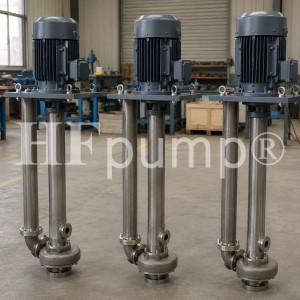
LEWMET-type nickel-chromium-based alloys are typically more suitable for key flow-wetted parts in chemical pumps rather than just being listed as a material name in technical agreements. When designing solutions, we generally focus on the following positions. First is the impeller. The impeller is the energy transfer component and the location with the most drastic flow velocity changes. For media like concentrated sulfuric acid, phosphoric acid, and acidic slurries, the impeller blade outlet, front and back shrouds, and impeller wear ring areas are prone to combined erosion and corrosion. Using nickel-chromium-based alloys can improve the impeller's corrosion and wear resistance in high acidic media. Second is the pump casing and pump cover. The pump casing bears pressure and is in long-term contact with the medium. For vertical sump pumps, slurry pumps, axial flow pumps, and circulation pumps, the casing flow channels have large areas, long medium residence times, and higher corrosion risks. If the medium contains acid sludge or crystals, the inner wall of the casing also suffer continuous abrasion. Third are wear rings, shaft sleeves, and wear-resistant bushings. These parts have small clearances and high flow velocities. If the material's hardness and corrosion resistance are insufficient, the clearances can quickly enlarge. Enlarged clearances reduce pump efficiency, increase recirculation, raise vibration levels, and ultimately affect and mechanical seal life. Fourth is the bottom pump body of vertical sump pumps and axial flow pump blades. For vertical sump pumps sulfuric acid and phosphoric acid units, the pump body is immersed in strong corrosive media for long periods, and maintenance conditions are often poor. If the flow-wetted part material is chosen incorrectly, later disassembly, inspection, and replacement costs can be high.
LEWMET-Type Materials Are Not Universal; Judgment Must Be Based on Medium Conditions
I do not recommend users interpret LEWMET or nickel-chromium-based alloys as a universal material suitable for "all acids." Every material has its application limits. The corrosion mechanisms of concentrated sulfuric acid, phosphoric acid, mixed acids, chlorine-containing acid solutions, fluorine-containing acid solutions, and solid-containing slurries are all different. As temperature rises from room temperature to 70°C, 100°C, 150°C, or even higher, material performance may also change completely. Therefore, before confirming the material, we generally ask users to provide a complete medium list, including: medium name, acid concentration, free acid content, temperature range, density, viscosity, solid content, particle size, chloride ion content, fluoride ion content, oxidizing impurities, whether crystallization occurs, whether there is erosion, whether operation is intermittent, and whether insulation or heat tracing is required. For sulfuric acid conditions, it is also necessary to distinguish between dilute sulfuric acid, concentrated sulfuric acid, fuming sulfuric acid, solid-containing sulfuric acid, and high-temperature sulfuric acid; for phosphoric acid conditions, attention must be paid to the impact of fluorine, chlorine, sulfate radicals, and solid impurities in wet-process phosphoric acid on material. Only by clarifying these data can we determine whether LEWMET-type nickel-chromium-based alloys are suitable, or whether Alloy 20, 904L, duplex stainless steel, Hastelloy, titanium, fluoroplastic lining, or other material solutions should be selected.
When Using Nickel-Chromium-Based Alloys in API610 Chemical Process Pumps, Structural Adjustments Are Also Necessary
Correct material selection is only the first step. For high-temperature concentrated sulfuric acid pumps, phosphoric acid pumps, and vertical sump slurry pumps, if the structural design does not cooperate, even the best material can cause problems. First, flow velocity must be. High flow velocity exacerbates erosion corrosion, especially at the impeller outlet, pump casing cutwater, elbows, and discharge flange. If the medium has a high solid content, we try to avoid abrupt changes in the flow channel, reducing dead zones and local eddy currents. Second, clearances must be controlled. When nickel-chromium-based alloys are used in combination with other materials, thermal expansion rates differ, and hot clearances must be recalculated. Do not rely solely on room temperature assembly clearances from drawings; otherwise, after high-temperature operation, issues like wear ring rubbing, shaft sleeve eccentric wear, or rotor instability may occur. Third, sealing must be considered. Mechanical seals for concentrated sulfuric acid and phosphoric acid pumps are not just for leakage prevention; factors like face materials, secondary sealing rings, flush fluid, cooling methods, and crystallization risks must also be considered. For high-temperature concentrated sulfuric acid or solid-containing phosphoric acid, the mechanical seal scheme should be carefully evaluated. In some conditions, vertical sump sealless structures, magnetic drive structures, or double mechanical seal schemes can be considered. Fourth, manufacturing processes must be considered. The casting, heat treatment, machining, welding, and inspection requirements for nickel-chromium-based alloys are higher than those for ordinary cast steel or ordinary stainless steel. Key flow-wetted parts require control over casting defects, surface quality, and dimensional accuracy to avoid local corrosion initiation points caused by manufacturing defects.
Application Approach in Jiangsu Haifa's API610 Chemical Pump Platform
Jiangsu Haifa Machinery Manufacturing Co., Ltd. produces API610 series chemical process pumps, covering structures such as OH1, OH2, OH3, OH4, BB1, BB2,3, BB4, BB5, and VS series, as well as vertical sump pumps, magnetic drive pumps, canned motor pumps, molten salt pumps, high-temperature pumps, slurry pumps, forced circulation pumps, and-resistant pumps. For LEWMET-type nickel-chromium-based alloy conditions, we generally do not recommend just one pump type; instead, we determine the structure based on the medium, installation method, and process conditions. For general horizontal process transfer, the API610-OH2 HES series chemical process pump can be considered. This series is suitable for continuous conditions in petrochemicals, oil refining, coal chemicals, fine chemicals, etc., featuring centerline support, strong high-temperature adaptability, and easy maintenance. For strong corrosive media, flow-wetted parts such as the impeller, pump casing, wear rings, and shaft sleeves can be designed with nickel-chromium-based alloys or other corrosion-resistant alloys as required. For low-flow, high-head acid liquid transfer, the API610-OH2-HES(X) low-flow chemical process pump can be considered. This series has a flow range of 0.8~12.5 m³/h, a head range of 12~125m, an applicable temperature range of -80~450°C, and a design pressure of approximately 2.5MPa. For clean or trace-particle-containing strong corrosive media, the key for low-flow pumps is controlling internal recirculation, clearance wear, and seal reliability. For high-temperature, heavy-load, high-flow conditions, BB2, BB3, BB4, and other between-bearing or multi-stage structures can be considered. For high-temperature concentrated sulfuric acid or phosph acid systems, pump rigidity, axial thrust, radial forces, nozzle loads, and seal cooling must all be considered together. Regarding materials, LEWMET-type nickel-chromium-based alloys, high-nickel alloys, duplex stainless steel, Hastelloy, or lined structures can be selected based on medium conditions. For tank, acid sump, underground pit, or deep liquid level conditions, vertical sump pumps or VS series structures are more suitable. When vertical sump pumps are used for sulfuric acid phosphoric acid, or acidic slurries, the flow-wetted parts are immersed in the medium for long periods, and the materials for the shaft sleeve, guide bearing, pump body, and impeller must be carefully evaluated. For strong corrosion and high abrasion conditions, LEWMET-type nickel-chromium-based alloys can be an important option for the pump body, impeller, and wear parts.
Material and Structural Focus for Concentrated Sulfuric Acid Pumps
The selection of concentrated sulfuric acid pumps cannot rely solely on the word "sulfuric acid." 93% sulfuric, 98% sulfuric acid, fuming sulfuric acid water-containing sulfuric acid, high-temperature sulfuric acid, and solid-containing sulfuric acid have vastly different material requirements. When designing concentrated sulfuric acid pumps, we typically focus on verifying the following: First, concentration and temperature. As temperature increases, corrosion risk significantly rises, especially in high-temperature circulating sulfuric acid systems. Second, flow velocity. High-speed erosion in concentrated sulfuric acid can easily destroy the protective state of the material surface, so special attention must be paid to the impeller outlet and pump casing cutwater. Third, impurity content. If chloride ions, fluoride ions, iron ions, acid sludge, or solid particles are present, material selection should be more conservative. Fourth, sealing and leakage risk. Concentrated sulfuric acid leakage not only corrodes on-site equipment but also poses safety risks. For high-hazard conditions, we prioritize low-leakage or leak-free structures. Fifth, shutdown crystallization and cleaning. Some acid liquids may crystallize or deposit during temperature changes; dead zones in the pump cavity, drain points, and flush ports should be designed in advance. Under these conditions, the value of LEWMET-type nickel-chromium-based alloys is mainly reflected in high-temperature concentrated sulfuric acid circulation, high-erosion areas, and long-cycle operation scenarios. It is not a simple replacement for all stainless steels, but is used where ordinary materials have insufficient service life.
Material and Structural Focus for Phosphoric Acid Pumps
Phosphoric acid pumps are more complex than many imagine. Wet-process phosphoric acid often contains fluorine, chlorine, sulfate radicals, silicon fluorides, solid particles, and unreacted impurities. Medium viscosity, density, and solid content also affect pump operation. For phosphoric acid slurry pumps, the material must be not only corrosion-resistant but also wear. When designing phosphoric acid pump solutions, we focus on impeller channel width, pump casing wear resistance, wear ring clearance, shaft seal type, and cleaning and inspection space. For high-solid-content phosphoric acid, structures with overly narrow flow channels or those prone to clogging are unsuitable. For phosphoric acid with high fluorine and chlorine content, ordinary stainless steel poses significant risks; based on actual laboratory data, high-nickel alloys, nickel-chromium-based alloys, duplex stainless steel, fluoroplastic linings, or other specialized materials should be selected. The advantage of LEWMET-type nickel-chromium-based alloys in phosphoric acid is their ability to balance corrosion resistance and wear resistance. Especially in phosphoric acid concentration, circulation, slurry handling, and solid-containing acid liquid transfer, if ordinary material impellers and pump casings wear too quickly, higher-grade corrosion-resistant and wear-resistant materials can be considered.
Our Design Principles for LEWMET-Type Material Chemical Pumps
From an engineering perspective, we do not simply write "LEWMET nickel-chromium-based alloy" in the material column and stop there. A truly reliable chemical pump material solution must achieve the following: First, medium conditions must be complete. Without temperature, concentration, impurity, and solid content data, material life cannot be easily promised. Second, materials should be designed by part. The corrosion and wear conditions at the impeller, pump casing, shaft sleeve, wear ring, pump cover, discharge flange, and guide bearing are different and cannot be treated uniformly. Third, structure should reduce erosion. No matter how good the material, the medium should not repeatedly damage the surface through local high-speed impact, eddy currents, and dead zones. Fourth, the seal must be suitable for acidic conditions. For concentrated sulfuric acid and phosphoric acid pumps, mechanical seals, vertical sump structures, magnetic drives, or external flush schemes should be selected based on medium hazard level. Fifth, manufacturing and inspection must keep pace. Special alloy materials require control over casting quality, machining accuracy, and dimensional stability; key components should undergo necessary material certifications, non-destructive testing, and dimensional checks. Sixth, on-site operation should avoid off-design conditions. Long-term low flow, cavitation, dry running, blocked inlets, and blocked discharge outlets will accelerate internal pump corrosion and wear.
Typical Conditions Suitable for LEWMET-Type Nickel-Chromium-Based Alloys
Based on our common chemical pump project experience, the following conditions can seriously consider LEWMET or equivalent nickel-chromium-based corrosion-resistant and wear-resistant alloys: High-temperature concentrated sulfuric acid circulation pumps; Concentrated sulfuric acid transfer pumps; Fuming sulfuric acid; Phosphoric acid circulation pumps; Wet-process phosphoric acid slurry pumps; Solid-containing acidic slurry pumps; Sulfuric acid unit vertical sump pumps; Fertilizer unit acid liquid transfer pumps; High-temperature acid liquid forced circulation pumps; Pumps for strong corrosion, high-density, high-abrasion media. These conditions share a common point: ordinary materials are not entirely unusable, but their service life may be unstable. For continuous chemical plants, the loss from pump shutdown for maintenance often outweighs the material cost itself. Therefore, for key pump positions, using higher-grade corrosion and wear-resistant alloys engineering value.
Conclusion
There is no simple answer for chemical pump material selection. For high-temperature concentrated sulfuric acid phosphoric acid, solid-containing acidic slurries, and strong corrosion/high abrasion media, LEWMET nickel-chromium-based alloy or equivalent high-nickel-chromium corrosion-resistant and wear-resistant alloy can serve as an important flow-wetted part material solution. Its value lies not only in corrosion resistance but also in maintaining a longer service life under the combined effects of high temperature, erosion, wear, and acidic media. As technical personnel at Jiangsu Haifa Machinery Manufacturing Co., Ltd., we are more focused on whether material truly matches the operating conditions. An API610 chemical process pump is not necessarily reliable just because a high-grade material is specified; rather, the pump type structure, flow channel design, sealing scheme, thermal expansion, manufacturing process, and on-site operating conditions must all be considered together. Only then can concentrated sulfuric acid pumps, phosphoric acid pumps, vertical sump pumps, and corrosion-resistant chemical pumps operate stably in actual plants, reduce maintenance frequency, and improve plant continuous production capacity.
上一篇:Liquid metal electromagnetic pump technology: design experience from liquid sodium, lead-bismuth alloy to nuclear-grade submerged electromagnetic pumps 下一篇:没有了
Jiangsu Haifa Machinery Manufacturing Co., Ltd.
📍 Headquarters: Jingjiang Economic and Technological Development Zone, Jiangsu Province (Yangtze River Delta Ecological Green Integration Demonstration Zone, Jingjiang Park)
📞 Hotline: (086)13905263417 & (086)13908365805
📠 Fax: (086)0523-84323581
📧 Email: jsareva@163.com jslgpump@gmail.com
🔧 Technical Support: One-stop service for pump & valve customization, non-standard design, on-site surveying, maintenance and repair
Member of China General Machinery Industry Association | Director of Valve Association | SINOPEC Resource Market Member Factory

Get QR Code